THE EXPERIENCE-LED HOSPITALITY PLAYBOOK
Article 04
Hybrid Havens
The strongest hybrid venues are not simply packed with more activities. They are designed to change mode without losing identity, allowing the same space to work harder across audiences, occasions and dayparts.
By Ales Kernjak, AK Works · 13 min read
Co-authored with Zachary Pulman, Zachary Pulman Studio
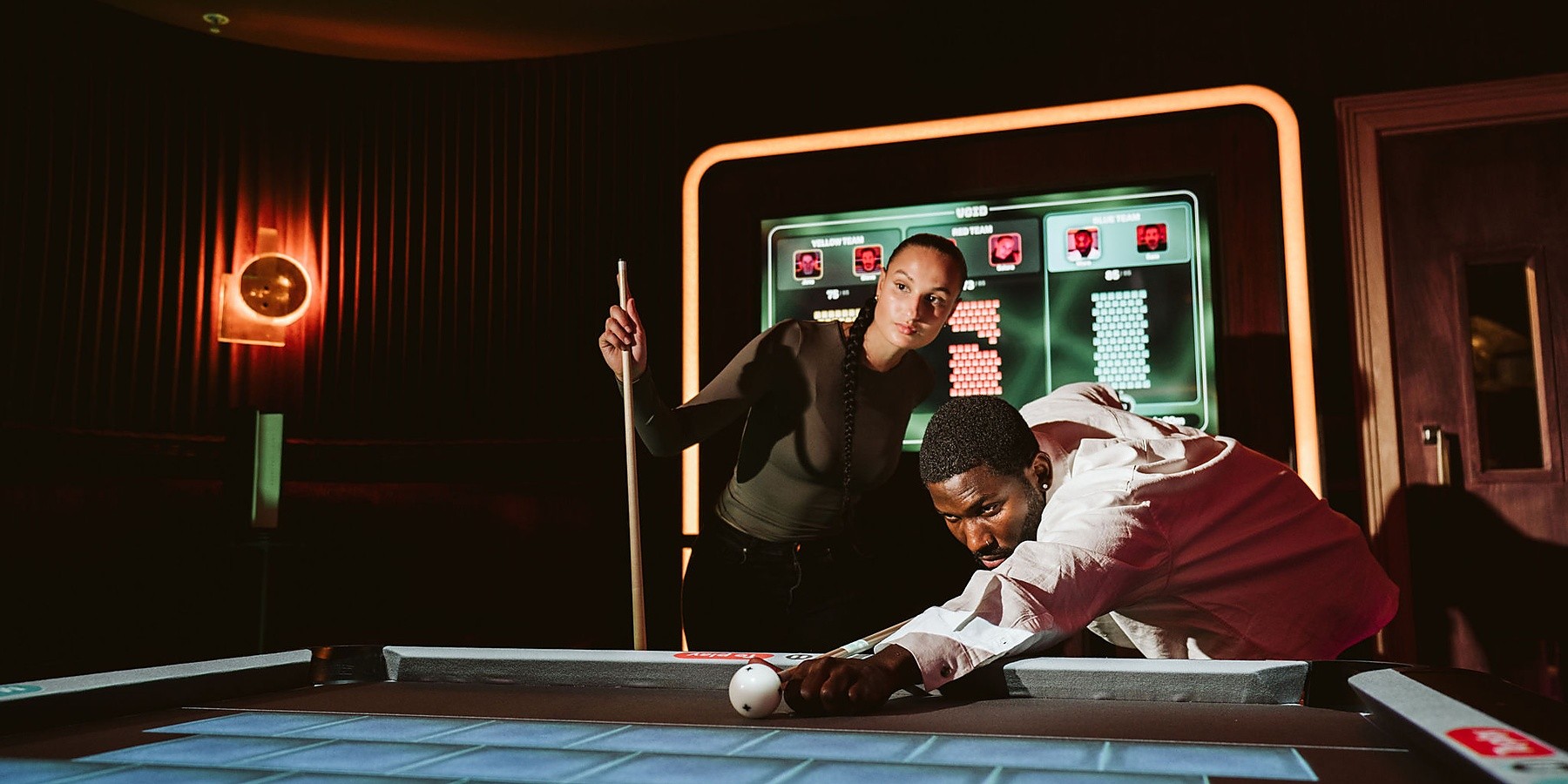
Adaptable venues use space, technology and programming as one system, not separate layers. Photo credit: ON IN LONDON / Clays, www.onin.london
A Venue Should Not Have Only One Good Hour
Many venues are designed around one ideal moment.
The Friday evening rush.
The birthday booking.
The corporate social.
The late-night group that orders enthusiastically and remembers selectively.
At peak time, the room works. The lights feel right. The music lifts. Staff are in rhythm. The offer makes sense because the audience and the occasion are exactly what the concept was built for.
Then the moment passes.
The same space can feel too loud for lunch, too empty in the afternoon, too casual for corporate hire, too adult for families, too rigid for events or too confused when asked to become something else entirely.
The commercial problem is often not the space. It is how narrowly the space has been programmed.
Hybrid venues offer a different opportunity. Not because they contain more things, but because they can support more meaningful modes of use. A strong hybrid venue can shift from daytime social to corporate event, from family occasion to after-work competition, from dining-led gathering to late-night energy, without the guest feeling as if the brand has changed costume in the toilets.
The challenge is not variety. It is coherence.
Hybrid Is Not About Adding More Things
A venue with games, food, drinks, screens, events and private rooms is not automatically hybrid.
It may simply be busy.
There is a difference between a concept that has multiple ingredients and a concept that knows how those ingredients work together. A list of activities is not a hybrid strategy. It is a floorplan with ambition and, occasionally, a storage problem.
True hybrid value comes from orchestration.
The question is not:
How many activities can we fit in?
The better question is:
How many meaningful experience modes can this space support well?
That distinction matters because each mode makes different demands. A corporate workshop needs visibility, control, pacing and hospitality that does not interrupt. A family daytime visit needs clarity, comfort, safety and easy movement. An after-work group needs momentum, service rhythm and a social permission structure. A late-night crowd needs atmosphere, energy, sound and a sense of occasion.
The physical space may remain broadly the same.
The experience cannot.
Think in Modes, Not Floorplans
A floorplan shows where things go.
A mode shows how the venue behaves.
That is the more useful design question for competitive socialising and experience-led hospitality. Not simply where the bar sits, where the games sit, where the tables sit and where the toilets are hidden with optimistic signage. The more important question is how the venue changes when the occasion changes.
A single footprint may need to support several modes:
Daytime social
Corporate hire
Family-friendly activity
After-work gathering
Competitive play
Dining-led experience
Late-night social energy
Private events
Each one changes the role of space.
Lighting may need to shift from open and welcoming to theatrical and intimate. Sound may need to move from background warmth to social energy. Furniture may need to support dining in one mode, spectating in another and mingling in a third. Staff may move from host to facilitator to service lead to event guide. The menu may change from shareable light plates to event packages, late-night snacks or pre-ordered group formats.
Booking logic changes too.
A venue that thinks only in tables, lanes or time slots can miss the real occasion. A group may not be booking “one hour of darts”. They may be booking a team celebration, a first date, a low-risk social occasion, a family afternoon, a client event or a reason not to go to another forgettable bar with exposed brick and a Negroni variation.
The mode is where the commercial and emotional logic meet.
Flexibility Has to Be Designed In
Flexibility is often discussed as if it means movable furniture.
It does not.
Movable furniture helps, but it is only one visible part of a much deeper system. A venue is not flexible because a table has wheels. It is flexible because the whole experience can shift without heroic staff effort every time.
Real flexibility depends on zoning, sightlines, acoustic separation, adaptable lighting, power and data infrastructure, storage, service routes, back-of-house logic, F&B adjacency and clear thresholds between public, semi-private and private space [3][4].
It also depends on knowing what should not move.
Some elements need to be fixed because they anchor identity. Others can flex because they support different behaviours. If everything moves, the venue can feel temporary. If nothing moves, the venue can become commercially stubborn.
The design challenge is hierarchy.
What stays constant?
What adapts?
What changes by audience?
What changes by time of day?
What changes only for events?
What must never change because it holds the brand together?
Without that hierarchy, flexibility becomes operational theatre. Staff drag furniture, reset lighting, explain awkward transitions, hide clutter and pretend the chaos is part of the charm.
It is not.
Flexibility that depends on heroic staff effort every time is not flexibility. It is choreography with a bad back.
Flexibility works when every mode still feels intentional.
Daypart Is an Experience Design Problem
Daypart is usually treated as a commercial planning issue.
Breakfast. Lunch. Afternoon. After work. Evening. Late night.
Useful labels, but not enough.
Each daypart carries a different emotional temperature. Morning may need calm, clarity and usefulness. Lunch may need speed and simplicity. Afternoon may need softness, accessibility and permission to linger. After-work needs release. Evening needs energy. Late night needs atmosphere without tipping into chaos, depending on the concept and whether anyone has been overconfident with tequila.
The mistake is assuming every venue should monetise every hour.
It should not.
A venue should not try to fill time at the expense of identity. Not every competitive socialising concept needs breakfast meetings, co-working, children’s parties, wellness mornings, corporate away days, bottomless brunch, late-night DJs and community chess. That is not strategy. That is panic with a calendar.
The stronger question is which dayparts the brand has the right to own.
A premium darts venue may stretch naturally into corporate hire and after-work leagues. A food-led social gaming concept may extend into brunch, celebrations and private dining. A large-format entertainment venue may support families by day and adults by night. A more intimate venue may be better served by fewer, stronger modes rather than trying to become everything to everyone.
Daypart strategy only works when the shift feels natural.
The guest should feel that the venue has changed mood, not changed personality.

Zoning, sightlines and flow work for the occasion. Atmosphere: Lighting, sound and pace signal the moment guests have entered. Service: Hosting, ordering and recovery adapt without becoming visible. Programme: Casual play, corporate hire and late-night sessions need different structures. Commercial model: Pricing, booking logic and private-hire formats support the mode.
The Guest Should Feel the Change, Not the Reset
There is a difference between transition and reset.
A transition feels intentional. The room changes temperature. Staff adjust the rhythm. Lighting, sound, food and hosting move the experience towards the next occasion.
A reset feels exposed. Tables are dragged. Staff look rushed. Guests see cables, clutter, half-changed signage and that peculiar hospitality expression that says, “Everything is absolutely fine,” while everything is very much not fine.
Hybrid venues need to manage change without making the operational shift the guest experience.
This is where design, service and operations meet.
If a venue moves from family afternoon to evening social play, the change may involve sound levels, menu emphasis, staffing posture, lighting, booking rules and game formats. If it moves from open play to private hire, it may involve thresholds, arrival routes, host roles, F&B staging, AV, signage and privacy. If it moves from casual visits to league night, it may involve scoring, pacing, communication, queue management and group energy.
The guest does not need to know how much changed.
They need to feel that the experience is right for the moment they are in.
Operational Flexibility Is the Real Test
A concept is not truly flexible if it is operationally painful.
This is where many hybrid ideas fail. They make sense in concept decks. They look convincing in renders. They produce excellent phrases such as “multi-use social ecosystem” and “adaptive entertainment platform”, which is usually the moment someone should ask where the chairs are stored.
Operational flexibility is brutally practical.
How long does the reset take?
Where does unused furniture go?
Can staff serve one zone while another is changing?
Can cleaning happen without breaking atmosphere?
Can the kitchen handle the shift in menu type?
Can group sizes change without compromising flow?
Can bookings be staggered without creating dead time?
Can private events happen without making regular guests feel secondary?
A flexible venue has to protect both the guest experience and the team experience.
If every mode requires a different operational miracle, the model will eventually punish the staff, confuse the guest and erode the margin. Strong design reduces effort. Weak design exports the problem to the floor team.
That is why the operating model should be designed with the spatial model, not after it.
Staffing, service choreography, setup time, cleaning, storage, booking rules and kitchen capacity are not back-end details. They are part of the experience system.
More Uses Do Not Automatically Mean More Value
The promise of hybrid venues is seductive.
More audiences.
More occasions.
More dayparts.
More private hire.
More revenue per square metre.
All possible.
Not automatic.
Every additional use adds complexity. It can broaden relevance, but it can also dilute identity. It can improve utilisation, but it can also complicate booking. It can create new revenue, but also create a venue nobody can quite explain.
The danger is not flexibility. The danger is versatility without hierarchy.
When too many modes compete equally, the brand becomes ambiguous. Guests struggle to understand what the venue is for. Staff struggle to know which behaviour matters most. Marketing becomes generic. The website starts saying things like “perfect for every occasion”, which usually means perfect for none of them in particular.
The strongest hybrid venues know their primary mode.
They know what the brand is best at. They know which occasions reinforce that role and which ones stretch it too far. They can flex because they have a centre of gravity.
That centre may be competitive play.
It may be food and drink.
It may be premium group hospitality.
It may be family entertainment.
It may be nightlife.
It may be corporate socialising.
But something has to lead.
Without a lead mode, hybrid becomes a polite word for confusion.
Versatility without hierarchy becomes ambiguity.
The Commercial Value of Adaptability
The commercial argument for adaptability is not that one space can do everything.
It is that one space can do the right things more often.
Hospitality and leisure venues operate under real constraints: rent, labour, build cost, energy, maintenance, staffing, licensing, booking patterns and uneven demand. Empty space still costs money. Underused hours still carry overhead. A room that only works brilliantly for a narrow window places pressure on the few hours when demand is strongest.
Revenue management research in hospitality has long focused on matching finite capacity with demand across periods, including the importance of seat-hour logic, daypart performance and shifting demand into shoulder periods [1][2]. The same broad principle applies to experience-led venues, even when the unit is not simply a restaurant seat.
The venue has capacity.
The guest has occasions.
The brand has to connect the two intelligently.
Adaptability can support that in several ways.
It can create more bookable occasions. It can smooth demand across dayparts. It can increase private-hire relevance. It can allow programming to respond to different audiences. It can make the same footprint work harder without constantly reinventing the concept. It can also improve resilience, because a venue designed around several coherent modes is less exposed to one behaviour, one audience or one peak window [5].
But the commercial value only appears when the modes are operationally viable and brand-relevant.
A quiet afternoon programme that nobody wants is not utilisation. It is theatre for the spreadsheet.
The goal is not to keep the space busy at all costs. The goal is to make the space more valuable without making the experience less clear.
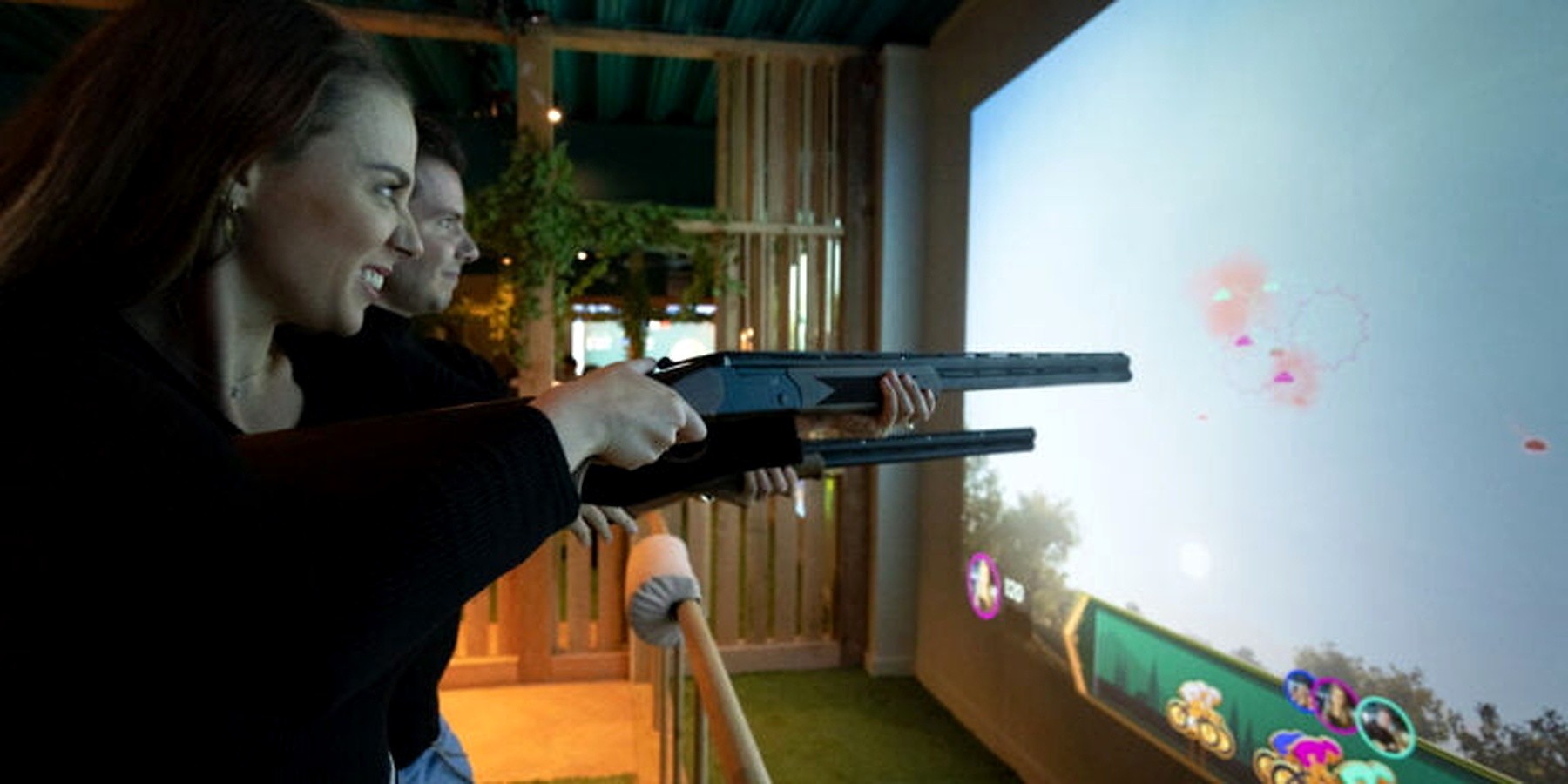
Hybrid venues work when physical play, digital feedback and atmosphere create one coherent social experience. Photo credit: Poolhouse, www.pool.house
The Brand Has to Survive Every Mode
A hybrid venue can change expression.
It should not change identity.
This is the line between adaptability and dilution. The atmosphere may shift. The service rhythm may change. The menu may flex. The lighting may move from bright and social to warm and theatrical. The programming may change from casual play to structured competition or private event.
But the brand should still feel like itself.
That requires a clear set of constants.
Tone of voice
Service principles
Visual coherence
Behavioural standards
Hosting style
Food and drink logic
The emotional role of the venue
If those constants are weak, every mode becomes a separate concept. The daytime version feels unrelated to the evening version. The private-hire version feels like a function room. The family version feels like a compromise. The late-night version borrows energy from somewhere else.
A strong brand system prevents that.
It allows the venue to flex without becoming fragmented. Guests may use the space differently, but they should still recognise the same underlying character.
That is especially important for operators who want to scale. A flexible concept without a clear brand system becomes harder to repeat. Teams interpret it differently. Designers solve the wrong problems. Local adaptations drift. The format becomes dependent on individual talent rather than transferable principles.
Adaptability needs rules.
Not to restrict creativity, but to stop the concept becoming a mood board with tills.
Hybrid Should Feel Coherent, Not Crowded
The most successful hybrid venues do not feel like several businesses sharing one roof.
They feel like one experience with different modes.
Physical space, service, programming, F&B, digital infrastructure and commercial logic need to work as one system. If the game, the bar, the booking journey, the event offer, the private room and the food programme all behave separately, the guest feels the joins.
The joins are where value leaks.
A group arrives for play but cannot order easily. A private event blocks the atmosphere for everyone else. A family visit feels awkward because the space only knows how to behave at night. A corporate booking feels like a birthday party with name badges. A late-night transition kills the dining experience too abruptly. The venue is technically multi-use, but experientially unresolved.
Hybrid design is therefore not about adding layers.
It is about alignment.
The best flexible venues do not feel like the same room being used differently. They feel right for the moment they are in.
That is the real opportunity for hybrid hospitality and competitive socialising. Not more formats. Not more screens. Not more things squeezed into the plan until the fire escape gives up.
A venue that adapts well can become more relevant, more resilient and more commercially useful.
But only when flexibility has a point.

The venue works at peak time, but struggles outside that moment. Flexible zones: The space separates play, hosting, watching and private use. Multiple modes: The same footprint supports different audiences without feeling improvised. Daypart programming: Afternoon, after-work, evening and private hire each have a clearer role. Adaptable platform: Programming, operations and commercial logic flex around one clear identity
The Brand Has to Survive Every Mode
A hybrid venue can change expression.
It should not change identity.
This is the line between adaptability and dilution. The atmosphere may shift. The service rhythm may change. The menu may flex. The lighting may move from bright and social to warm and theatrical. The programming may change from casual play to structured competition or private event.
But the brand should still feel like itself.
That requires a clear set of constants.
Tone of voice
Service principles
Visual coherence
Behavioural standards
Hosting style
Food and drink logic
The emotional role of the venue
If those constants are weak, every mode becomes a separate concept. The daytime version feels unrelated to the evening version. The private-hire version feels like a function room. The family version feels like a compromise. The late-night version borrows energy from somewhere else.
A strong brand system prevents that.
It allows the venue to flex without becoming fragmented. Guests may use the space differently, but they should still recognise the same underlying character.
That is especially important for operators who want to scale. A flexible concept without a clear brand system becomes harder to repeat. Teams interpret it differently. Designers solve the wrong problems. Local adaptations drift. The format becomes dependent on individual talent rather than transferable principles.
Adaptability needs rules.
Not to restrict creativity, but to stop the concept becoming a mood board with tills.
Hybrid Should Feel Coherent, Not Crowded
The most successful hybrid venues do not feel like several businesses sharing one roof.
They feel like one experience with different modes.
Physical space, service, programming, F&B, digital infrastructure and commercial logic need to work as one system. If the game, the bar, the booking journey, the event offer, the private room and the food programme all behave separately, the guest feels the joins.
The joins are where value leaks.
A group arrives for play but cannot order easily. A private event blocks the atmosphere for everyone else. A family visit feels awkward because the space only knows how to behave at night. A corporate booking feels like a birthday party with name badges. A late-night transition kills the dining experience too abruptly. The venue is technically multi-use, but experientially unresolved.
Hybrid design is therefore not about adding layers.
It is about alignment.
The best flexible venues do not feel like the same room being used differently. They feel right for the moment they are in.
That is the real opportunity for hybrid hospitality and competitive socialising. Not more formats. Not more screens. Not more things squeezed into the plan until the fire escape gives up.
A venue that adapts well can become more relevant, more resilient and more commercially useful.
But only when flexibility has a point.
Takeaway
Hybrid venues create value when they are designed to adapt with purpose. The opportunity is not to fill every square metre with another activity. It is to make one environment relevant across different moments, audiences and occasions without losing clarity or character. That requires more than flexible furniture. It requires experience modes, operational planning, service choreography, daypart logic, commercial hierarchy and a brand system strong enough to survive every shift. The strongest spaces do not simply contain more. They know how to change.
What Comes Next
Once a venue can flex across occasions and dayparts, the next question is what anchors people within it. Increasingly, that anchor is food. Article 05 looks at why F&B is moving from supporting act to central experience driver, and how culinary thinking can shape dwell, spend, service rhythm and return.
[1] Kimes, S.E. (1999). Implementing Restaurant Revenue Management: A Five-step Approach. Cornell Hotel and Restaurant Administration Quarterly, 40(3), 16-21. Used to support the principle that hospitality capacity and revenue performance depend on understanding demand, duration and period-based utilisation. https://doi.org/10.1177/001088049904000315
[2] Kimes, S.E. (2004). Restaurant Revenue Management: Implementation at Chevys Arrowhead. Cornell Hotel and Restaurant Administration Quarterly, 45(1), 52-67. Used to support the wider capacity logic behind making hospitality space, seating and operating rhythms work harder across demand periods. https://doi.org/10.1177/0010880403260107
[3] Bitner, M.J. (1992). Servicescapes: The Impact of Physical Surroundings on Customers and Employees. Journal of Marketing, 56(2), 57-71. Used to support the principle that physical environments influence both customer and employee responses in service settings. https://doi.org/10.1177/002224299205600205
[4] Line, N.D. and Hanks, L. (2019). Servicescape, positive affect, satisfaction and behavioural intentions: The moderating role of familiarity. International Journal of Hospitality Management, 78, 102-110. Used to support the relevance of environmental cues, affect, familiarity and behavioural intention in hospitality settings. https://doi.org/10.1016/j.ijhm.2018.11.003
[5] Mariotti, C. (2020). Sustainable development: an adaptive re-use solution for the hospitality industry. Worldwide Hospitality and Tourism Themes, 12(5), 623-637. Used as broader support for adaptive-use thinking in hospitality environments. It does not directly evidence competitive-socialising performance. https://doi.org/10.1108/WHATT-06-2020-0047